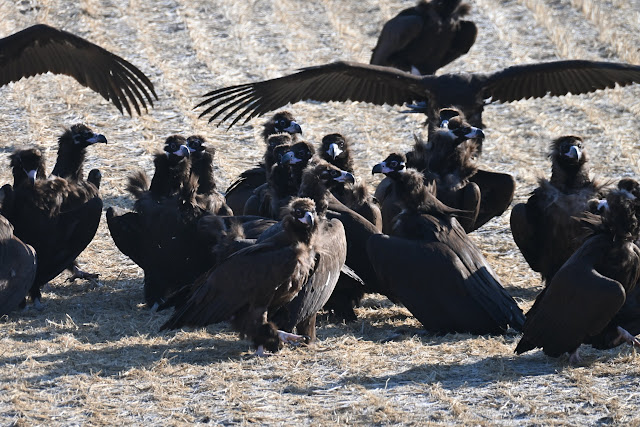
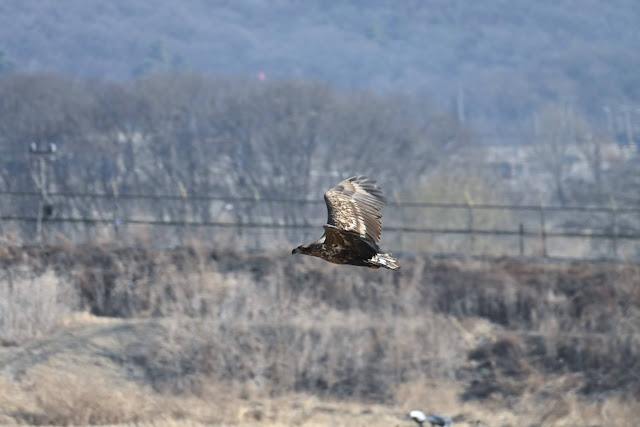
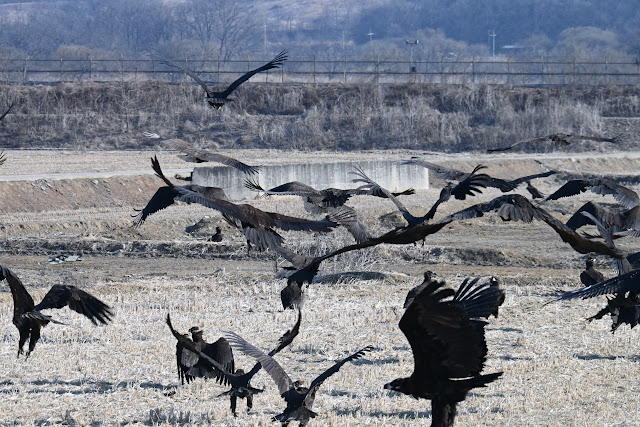
In February I visited Paju. In South Korea, people are working to protect cinereous vultures. The effort is said to have begun when Kim Deok-seon, a Korean high school teacher, started feeding them at his own expense after seeing weakened birds in the mountains.
The cinereous vulture is a large bird of prey distributed widely across Eurasia. It breeds around the dry regions of Mongolia and migrates about 3,000 kilometers to the Korean Peninsula in winter.
In the past, these vultures survived by eating leftovers from wolf hunts and meat discarded by farms. In recent years, however, urban development and environmental change have made it harder for them to find such natural food. As a result, starving birds have been found in South Korea.
In response, several private conservation activities have developed around the country. Kim Deok-seon works in Goseong, Gangwon Province, and when I looked into the issue I also found information about similar activities around Cheorwon and Paju, north of Seoul.
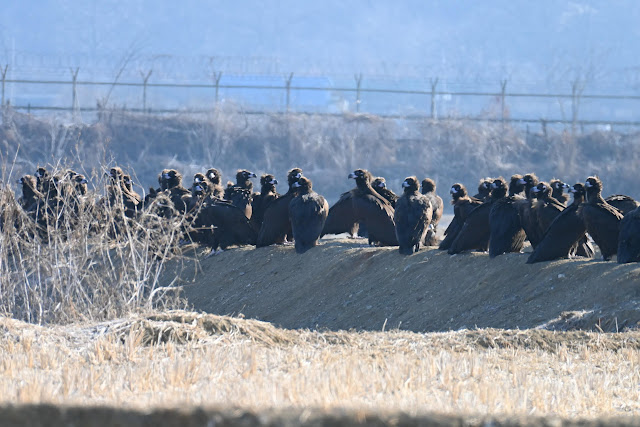
Paju is about two hours from Seoul by car. It is adjacent to the Demilitarized Zone on the border with North Korea, and access to the area used to be heavily restricted. Today, some areas are open and are used for nature observation and environmental conservation.
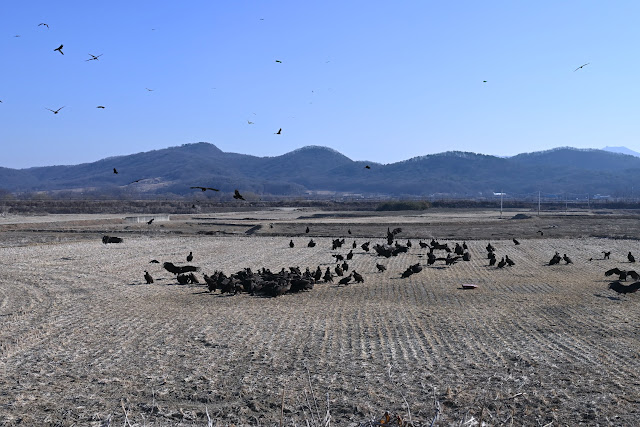
This region contains both the memory of war and the recovery of nature. Monitoring of wild birds and rare species is carried out around rivers and wetlands. Cinereous vultures are part of that landscape; they stay here during winter and appear at feeding sites.
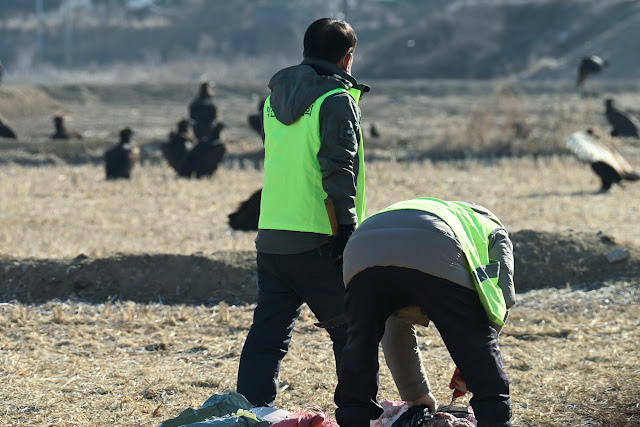
The site I visited was in Jangsan-ri, Munsan-eup, Paju. A group called the Imjin River Ecology Preservation Association is active there. They feed the vultures around 9:30 a.m. every Tuesday, Thursday, and Saturday, and visitors can join or observe for 10,000 won per person.
The official information is in Korean, so it is best to translate the necessary details before visiting. I was taken there by someone I knew. Most visitors came by private car, but some appeared to have arrived by Kakao T. A chartered Kakao T ride from Seoul Station is said to cost around 150,000 won.
Address: 36 Jangsan-ri, Munsan-eup, Paju-si, Gyeonggi-do. Participation fee: 10,000 won per person. Activity days: Tuesday, Thursday, and Saturday from around 9:30 a.m. In 2025 the season runs until March; the next season will likely begin around December. The association also has a Korean-language Band page.
These activities are not supported by a huge organization but by local residents and individual effort. They offer a chance to experience coexistence with nature, not just the most advanced urban side of South Korea. I felt it was worth visiting as a way to understand the point where living creatures and human activity meet.