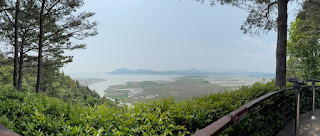
In May I visited Suncheon, a city in southern South Korea. The area is home to the vast wetland known as Suncheon Bay. Located in South Jeolla Province, the bay covers about 30 square kilometers and includes salt marshes, reed beds, and tidal flats. It is highly valued as habitat for birds, fish, crustaceans, and many other forms of life. Because of that importance, it was registered as a Ramsar wetland in 2006 and recognized as part of a UNESCO World Natural Heritage site in 2021.
In the late twentieth century, rapid industrialization and urban development advanced in South Korea and many other countries. Economic growth was treated as the top priority, and many wetlands and natural environments disappeared under development. The area around Yeongjong Island, where Incheon International Airport was built, and Saemangeum, the venue for the 2023 World Scout Jamboree, were also once rich tidal flats.
Japan is no exception. Since the postwar period of rapid economic growth, many coastal areas and wetlands have been lost to development. The Maihama area of Urayasu, Chiba, where Tokyo Disneyland and DisneySea now stand, was originally tidal flat along Tokyo Bay. Large-scale reclamation from the 1970s completely transformed the natural environment, and habitat for many aquatic organisms and migratory birds was lost. Isahaya Bay, once one of Japan's largest tidal flats, was closed off by a dike in 1997 as part of a national reclamation project, causing serious ecological impacts and continuing lawsuits and debate.
These examples show a history in which nature has repeatedly been pushed aside in the name of national interest or economic development. Even when environmental assessment systems existed, they often lacked practical force, and decisions that prioritized development over conservation continued.
Against that background, Suncheon Bay stands out as an advanced international case of nature conservation. Large-scale urban development was relatively limited in South Jeolla Province, and Suncheon recognized the value of its wetlands early. Since before the 2000s, the city has gradually restricted commercial fishing, purchased farmland, restored wetlands, moved utility poles underground, and removed concrete revetments. In 2003, a local ordinance established a legal protection framework.
Thanks to these efforts, Suncheon Bay has become an extremely important stopover and wintering site for migratory birds. It is part of the East Asian-Australasian Flyway Partnership network, and about 60 percent of the global population of the white-naped crane, an endangered species in Japan, has been confirmed to winter there. In February 2024, the International Crane Foundation also praised the results of the ecosystem conservation work.
Suncheon's example suggests a way for humans and nature to coexist. The region shared values that cannot be measured only by economic indicators and looked for a balance between conservation and development. Suncheon Bay shows that ecosystems once thought to be lost can recover when there is the will and action to bring nature back and live alongside it.
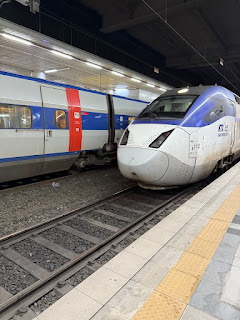
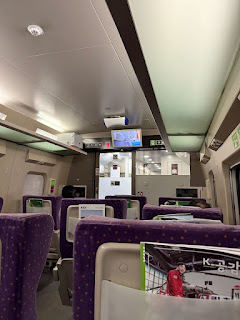
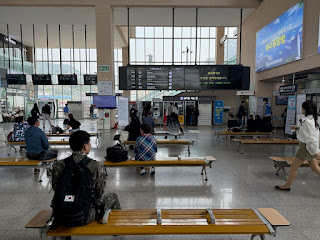
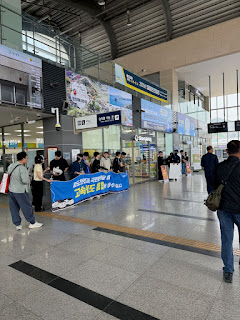
The KTX-Sancheon ride from Seoul took about three hours. First class and economy did not feel very different. I bought a boxed meal at Seoul Station, and the rice was warm. Suncheon Station felt like a typical regional station, though there were more passengers than I expected. There was also a national railway strike at the time.
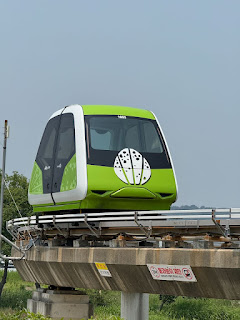
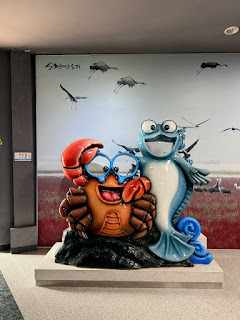
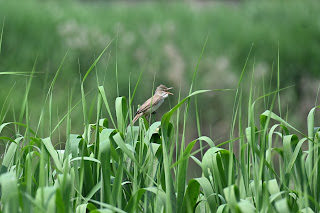
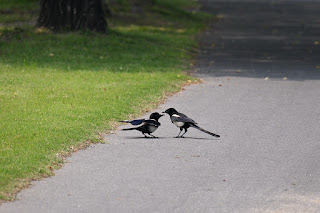
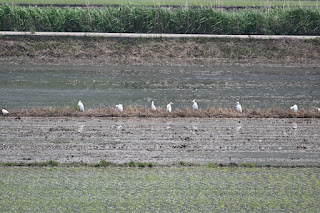
I rode the Sky Cube, a next-generation transit system designed with environmental impact in mind. It was faster than expected and a little scary. Beyond it, the wetlands stretched as far as I could see. I also saw a mysterious local character, an Oriental reed warbler, a magpie, and cattle egrets.